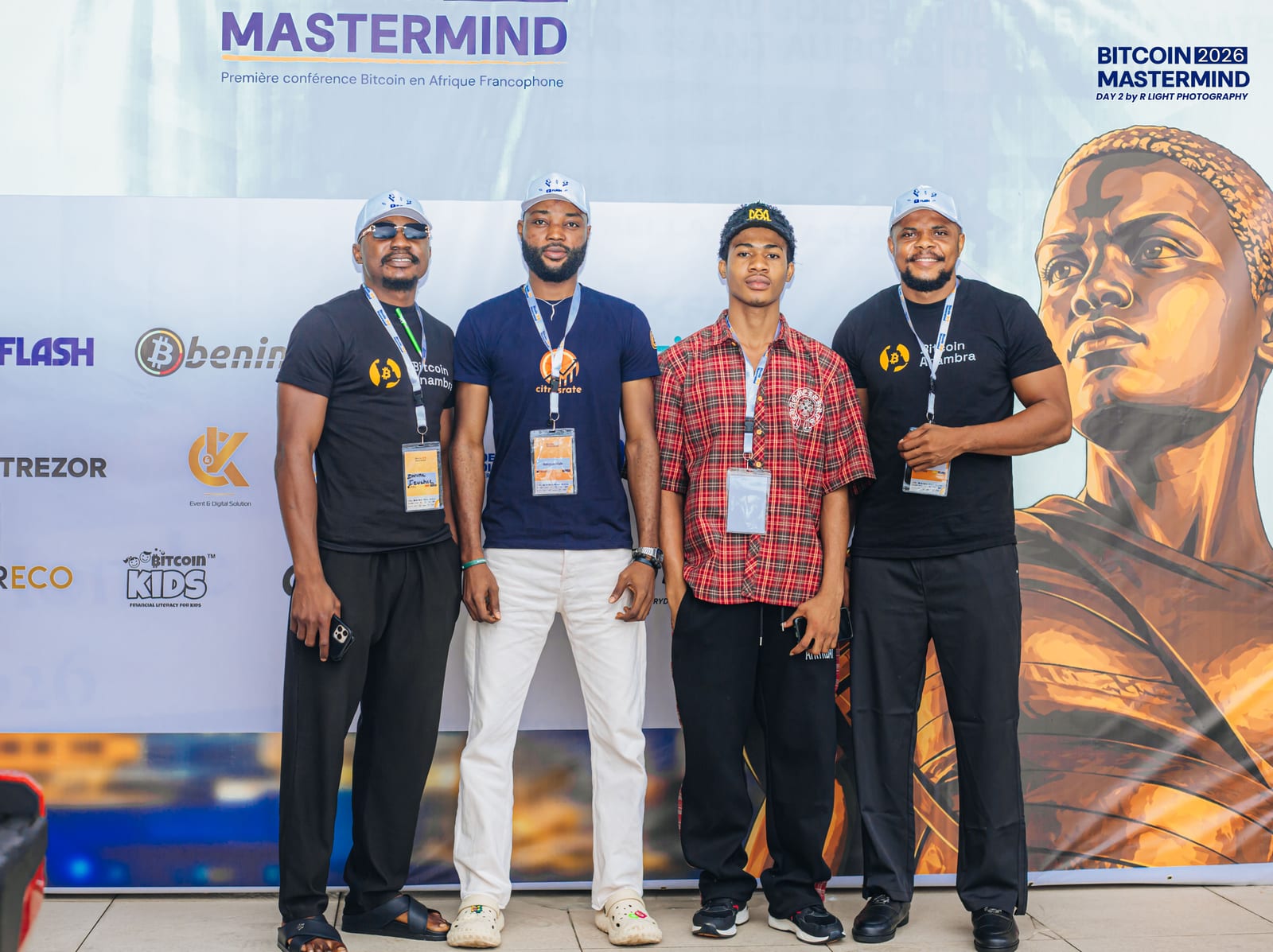
I landed in Cotonou with a mix of excitement and curiosity, travelling with my fellow Nigerian Bitcoiners Malik Balogun, Kester Ejikeme, and Divine Izuehie. We went the whole way by road from Nigeria, crossing borders and taking in the journey, and it was worth it.
I'd been following Bitcoin adoption across Africa long enough to know Bitcoin Mastermind was the main gathering for French‑speaking Bitcoiners. But nothing prepared me for the energy the moment I stepped into the Golden Tulip Le Diplomate. Before I get to that, let me back up to how we arrived.
Day 0: The Road to Cotonou
We set out on Wednesday, July 2nd — the day before Day 1 officially began. The trip took about seven hours by road, not counting the waiting around. We met at Oshodi, headed for Badagry, reached the Seme border, cleared immigration, and crossed into Benin. From the border park, we grabbed a cab to our lodge at J'reside.
After resting up, we headed out to Rama Cafe, paid for our food in Bitcoin, and joined a small meetup — catching up with old friends and making new connections. I'll admit I was a little nervous; it was my first time in Cotonou, and I only knew a handful of Francophone Bitcoiners. But everyone was warm and welcoming.
Pro tip: never feel shy about meeting a Bitcoiner. Most of them are just as friendly and just as eager to meet you as you are to meet them.
Then we headed home to prepare for Day 1. I'd been invited to speak, so I'll share that experience too... Let's dive in.
The Bitcoin Mastermind Experience
Bitcoin Mastermind 2026 (BMM2026) was a three‑day conference held July 3 to 5 at the Golden Tulip Le Diplomate in Cotonou. It's the premier Bitcoin gathering for Francophone Africa, now in its sixth edition since 2021, built around uniting French‑speaking Bitcoiners: builders, entrepreneurs, developers, educators, and enthusiasts from across the region.
The focus was practical adoption over speculation: education, open‑source development, financial inclusion, sovereignty, cross‑border collaboration, and building local infrastructure.
The Francophone communities showed up in force: Hope with Bitcoin, Bitcoin Togo, Bitcoin Burkina Faso, Bitcoin Benin (the organizing team), Satoshi Coffee, Conference Bitcoin Afrique, and Bitcoin Kids. I met French‑speaking Bitcoiners in person for the first time, people like Bouhari, Milton, Cedric, Fidèle, Ola, and many more, including people I’d only connected with online, like Nzonda Fotsing and Loic. I’d met Alphonse once before, at BitDevs Lagos last year.
Day 1: Developer Day, Hands in the Code
The event kicked off July 3rd with Developer Day, and the energy was different from the bigger English‑language conferences I've attended. Instead of high‑level keynotes, we went straight into technical workshops.
Sessions focused on the Lightning Network, self‑custody best practices, AI in development, and practical Bitcoin building. I spent the day moving between rooms watching project leaders present. One highlight was Malik debugging his X402 demo, paying on the internet, live.
I was surprised how many of these builders were already running real Bitcoin projects in their home countries. What struck me most was the focus on self‑sovereignty. Speakers kept returning to the idea that Bitcoin isn't about price, it's about building systems Africans can actually trust and control. That message landed differently in French, surrounded by people from Benin, Burkina Faso, Senegal, Cameroon and beyond.
Day 2: Conference Day, Real Use Cases, Not Theory
Day 2 delivered some of the strongest content of the event. Panels covered merchant payments, P2P remittances, domestic mining, and using Bitcoin as a savings and sovereignty tool.
I was tense, not from missing home but because I was presenting first that day. One talk that stayed with me was Assan Mefire's on building resilient financial platforms. His line, "Bitcoin is secure. Your fintech is not," captured a reality many Africans live with. Malik's presentation also gave me concrete ideas I'm now exploring for my own work on agents and payments.
The hallway conversations were as valuable as the stage. I kept meeting developers, entrepreneurs, and educators who are actually shipping Bitcoin products in their countries. Not theory, people actually solving real problems.
Day 3: Celebration, Hackathon, and the Bitcoin Knowledge Hub
Day 3 was my favorite. It opened with the hackathon finals, five teams pitching to a jury, and the quality was genuinely impressive. Team Bright Minds took first place and 500,000 XOF. Second place won 300,000 XOF, Team Time Care took third with 150,000 XOF. Watching young builders present working products they'd built in days was inspiring.
Then came a cake‑cutting ceremony, small but full of heart, and after that the cultural highlight: the trip to Ouidah. Visiting the Python Temple and walking through the historic slave trade sites, including the Door of No Return, grounded the whole conference in something deeper than technology. In that setting, Bitcoin felt like part of a longer story of African resilience and self‑determination.
The biggest announcement came near the end of Day 3: the official launch of the Bitcoin Knowledge Hub. The room erupted. For many of us this was the most important outcome of the event, the moment it moved from a conference to permanent infrastructure.
The Bitcoin Knowledge Hub
The Hub is a new initiative to build structured, long‑term Bitcoin education resources in French for the Francophone African ecosystem. It's the kind of thing every Bitcoin community wants, a permanent physical space for collaboration, learning, and asking questions.
The day after the announcement, the team opened the doors. Before that we spent time at the beach soaking in the culture, then gathered for the opening. It was a warm crowd. We reconnected with lot of Bitcoiners who came to celebrate with the team. I also shared some stickers from NoWasteBTCsigns.
The space itself amazed me. Multiple rooms that can each serve a purpose, including one that could work as a podcast studio, classroom space, and even a headquarters for the team. It's a wonderful piece of infrastructure, and being there left me inspired to keep doing strategic work for the ecosystem.
Spending Sats with Flash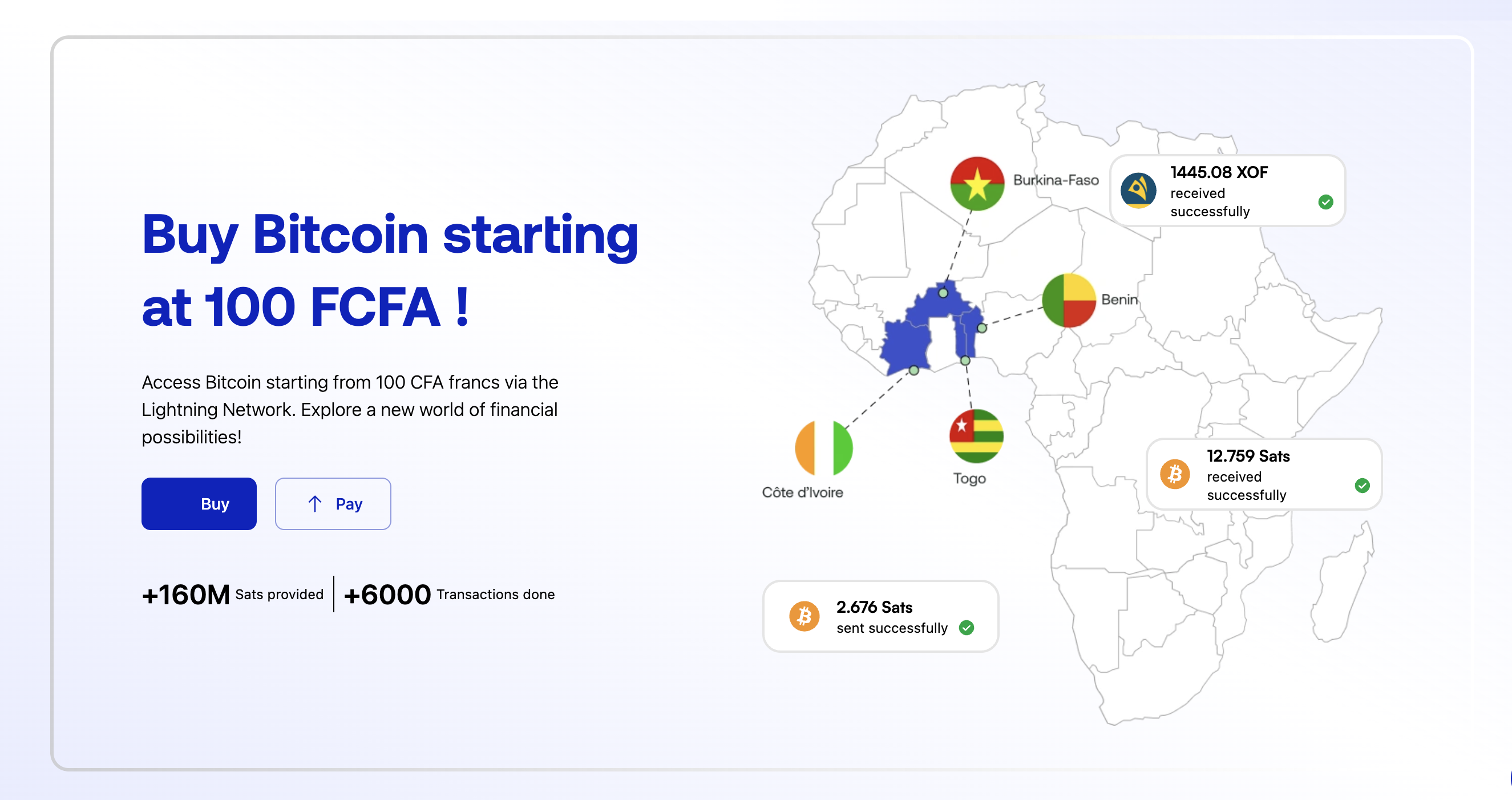
When I got to Benin I realized I had a few problems. I'm a native English speaker in a French‑speaking country, I had no CFA (local currency) on me, and outside my Nigerian crew I had no real‑life friends there.
The language I mostly solved with Google Translate. The friends part solved itself, because there was a Bitcoin community waiting and I connected with new French‑speaking Bitcoiners fast. But the money was the real question. I had no local currency. What I did have was sats.
So I used Flash, a Bitcoin‑only exchange built by some of the same people behind Bitcoin Mastermind. Flash let me convert my sats to local currency without needing another Bitcoiner physically present to trade with, which mattered a lot when none of us Nigerians could just walk to a bank and withdraw. Through Flash we paid for Uber rides and other things directly.
The interface was seamless. The app was in French and I still navigated it and completed payments without a clue what half the labels said, which tells you how simple it is. If you're travelling to a French‑speaking country the Flash team serves, use it. Shout out to the builders.
The Real Magic Was the People
Beyond it being my first time, what made BMM2026 special was the community. I met builders I'd followed online for years. I had deep conversations with people across West and Central Africa working on Lightning, education, and payments. The organizers, especially Loïc Kassa and Alphonse Mehounme, built an environment that felt welcoming, professional, and genuinely collaborative.
This wasn't a conference where speakers vanished after their talks. People stayed, connected, and kept talking late into the evenings. That shared sense of purpose is something I rarely feel at bigger events.
My Key Takeaways
A few reflections from Cotonou:
- Francophone Africa is no longer waiting: Builders are moving fast and building Bitcoin solutions for their own realities and communities
- Education infrastructure matters: The Bitcoin Knowledge Hub could be a game‑changer for making quality Bitcoin education more accessible across the region
- Community beats everything: The strongest part of this event wasn’t any single talk, it was seeing different communities from across Francophone Africa and beyond come together, participate, connect, and share ideas
- Practical focus wins: The strongest conversations were about real use cases and how Bitcoin can solve real problems, not price
- The event showed how quickly the Francophone Bitcoin movement is maturing
This is the kind of work we need to see more of across Africa. At Bitcoin Africa Story, we believe these stories, builders, educators, and communities deserve to be documented, connected, and amplified. Africa isn’t waiting to be part of the Bitcoin story. We’re building it here
Final Thoughts
If you're building anything in Bitcoin in French‑speaking Africa, or you want to see where real grassroots adoption is happening, you should be at this event next year. Bitcoin Mastermind isn't trying to be the biggest conference. It's trying to be the most useful one for the people who actually need it, and on that mission it succeeded.
I left Cotonou more optimistic about Bitcoin's future in Africa than I've ever been. This event gave me clarity on how I want to contribute going forward. To the entire organizing team, thank you. You didn't just host an event, you helped strengthen a movement.