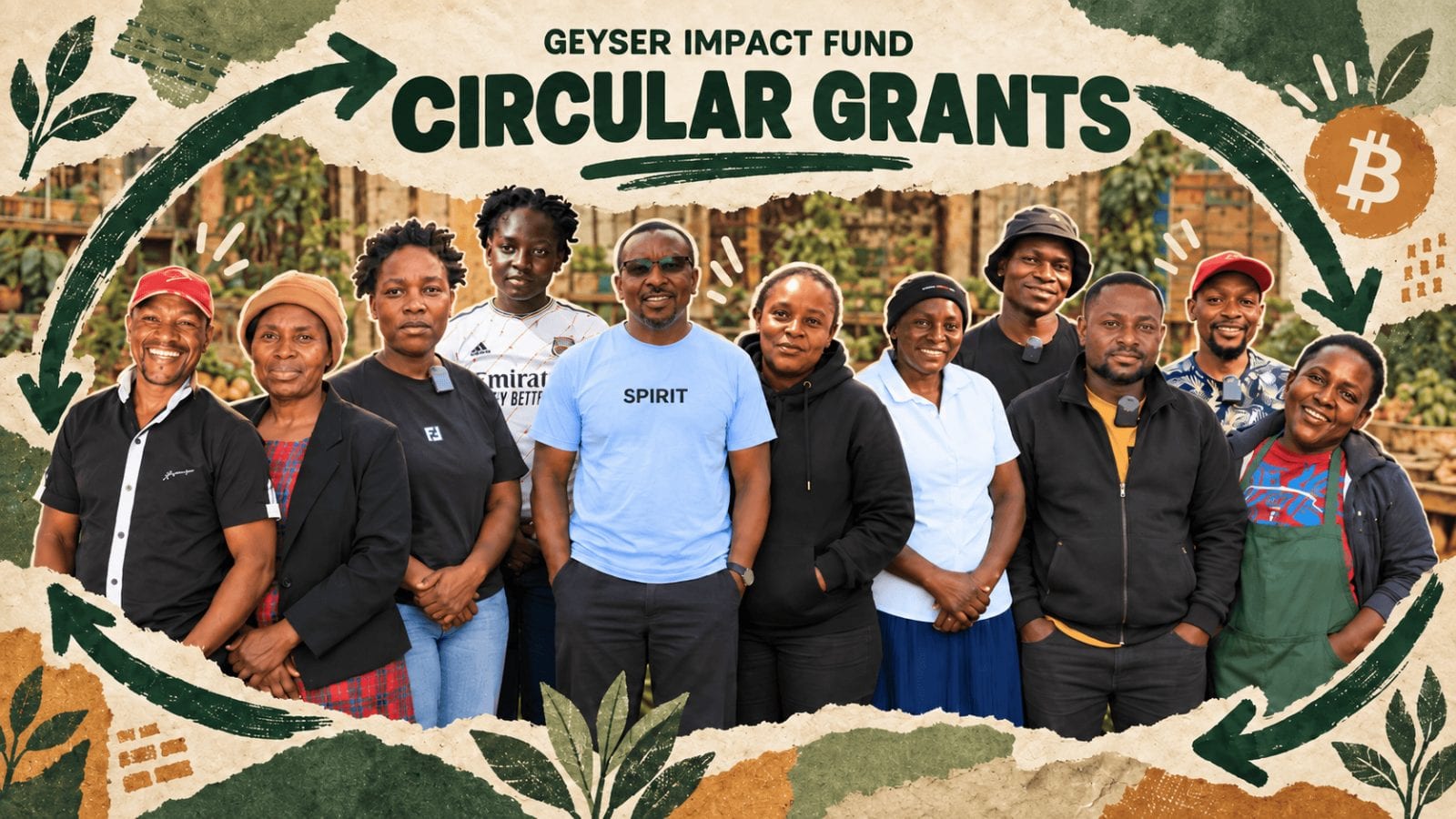
Yummy Tummy started six years ago in Kibera, Nairobi, with one small pot of peanut butter. Today a team of two makes peanut butter, roasted peanuts and fruit products, with about 60 orders waiting.
A $250 circular grant, fully funded on October 17, lets the business buy ingredients and packaging in bulk. It is the first grant funded entirely by sats that earlier merchants paid forward, Ronnie Mdawida, founder of Afribit Kibera, said in an X Space on October 21.
Geyser, which hosted the Space, used to be a Bitcoin crowdfunding platform. It now focuses on funding small businesses, through field partners such as Afribit Kibera and Bitbiashara. "After just three months, we see a 22% voluntary forwarding rate," co‑founder Mick Morucci said.
Here's how circular grants work, why Geyser changed course and what the first merchants have done with the money.
How Geyser's Circular Grants Work
A circular grant is capital with no interest and no fixed repayment. Geyser first called them "recoverable grants." Geyser raises the money, and the Bitcoin community "has funded around 50% of all Circular Grants," it said in an October 9 post.
A field partner, usually a local Bitcoin circular economy, picks the merchant and stays close to the business. When the business picks up, the merchant pays forward what they can, and the field partner passes it to the next merchant.
Moses Makori used a Bitbiashara grant to buy a coffee machine for Haven Food Court, the restaurant he runs in Tena Estate. The restaurant has voluntarily paid forward 100,000 sats into its community fund, Geyser said in the same post.
The model runs on trust. "It's a system that is very easy to scam, but when you scam it you break it, and you know it's not going to be available for anyone else in your community," said Gabriel Kurman, who has helped Geyser with the grants from the start.
At Afribit Kibera, recipients come from merchant chamas, or savings groups, and the group helps pick who goes next. Mdawida said the team looks for consistent Bitcoin merchants running essential businesses, with a balance of ages and genders.
"There's no single fixed amount that a merchant should pay forward. It depends on what you are able to afford, and there's no coercion or pressure" Mdawida said.
Geyser keeps 5% of every grant to cover its costs while it tests the model, and the other 95% goes to the local hub, it said in a September 16 post. In an October 9 thread, Geyser named Afribit Kibera and Bitbiashara as its two active field partners. Both are also part of the Circular Bitcoin Africa Fund.
Why Geyser Stopped Crowdfunding
"For more than two months, Geyser has not been live in its original function as a crowdfunding platform," its co‑founder Mick said. The trigger was losing Boltz, the payment infrastructure it used for peer‑to‑peer payments. That forced a rethink of where Geyser was adding value, and the grants it had been testing with Mdawida since June or July stood out.
"The key problem with donation is trust," Mick said. A donor abroad can't know whether a stranger will use the money as promised. Field partners solve that by vouching for the people who receive it.
During Geyser's X Space, host Vince said microloans in these communities can carry interest rates in the "two or three digits." Kurman contrasted them with bank loans, which he said are often withdrawn when borrowers need them most.
A week or two before the Space, Geyser rebranded with a new logo built around circularity, work Mick credited to fellow co‑founder Stelios.
What Kenyan Merchants Have Done With Circular Grants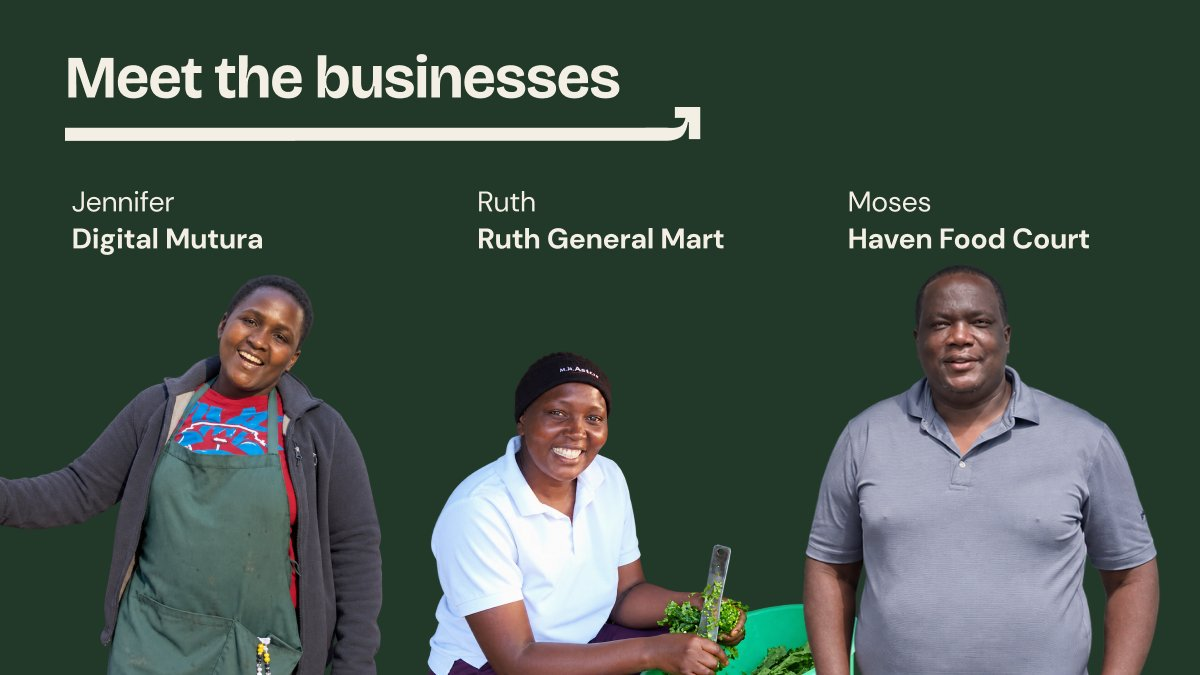
"When you start discussing the availability of growth capital at zero cost, that's a super powerful discussion," Kurman said.
- Lydia has run Richland, a neighborhood shop in Nairobi's Tena Estate, for 14 years, selling milk, bread and household essentials. Rising prices made it hard to keep the shelves full. A $555 grant through Bitbiashara restocked the shop, and she plans to pay the capital forward over about 24 weeks.
- Jennifer's Digital Mutura, also in Tena Estate, was fully funded at 493,000 sats, about $378. The grant pays for a sheltered space, better cooking equipment and more stock, so she can sell all day instead of only in the evenings. She plans to pay forward about $2.71 a day.
- Yummy Tummy's Geyser campaign sets out longer‑term goals: a dedicated production space and its products on shop and supermarket shelves in Nairobi. Also in Kibera, Geyser launched a $250 grant in September for Melchizedek's Kingshop. Another Afribit Kibera grant, for a beauty shop popular with young upcyclers, is half funded, Mdawida said.
- Bitbiashara's merchants often need more. "When they are stuck, they are stuck because of something like 100,000 Kenyan shillings," said Rosaline Wangui Waithiegeni, founder of Bitbiashara, "like a thousand dollars or seven hundred dollars and above."
- Geyser's newest grant, launched during the Space, is $772 for David's Grandmatt Shop in Tena Estate, which sells groceries, household items and school stationery. David has run it for 10 years, Rosaline said. The grant buys stock in bulk for the 10‑week school holiday and the January term. He plans to pay about 50,000 sats a week into Bitbiashara's community fund.
The grants are also drawing in merchants who don't take Bitcoin yet. Damiano, an Afribit Kibera educator, has run three Bitcoin sessions for groups of new merchants who organized themselves.
"Some men who dismissed Bitcoin as 'not our thing' have come round after seeing the results, and you find now couples start working together, embracing Bitcoin," Mdawida said.
What Comes Next for Geyser's Circular Grants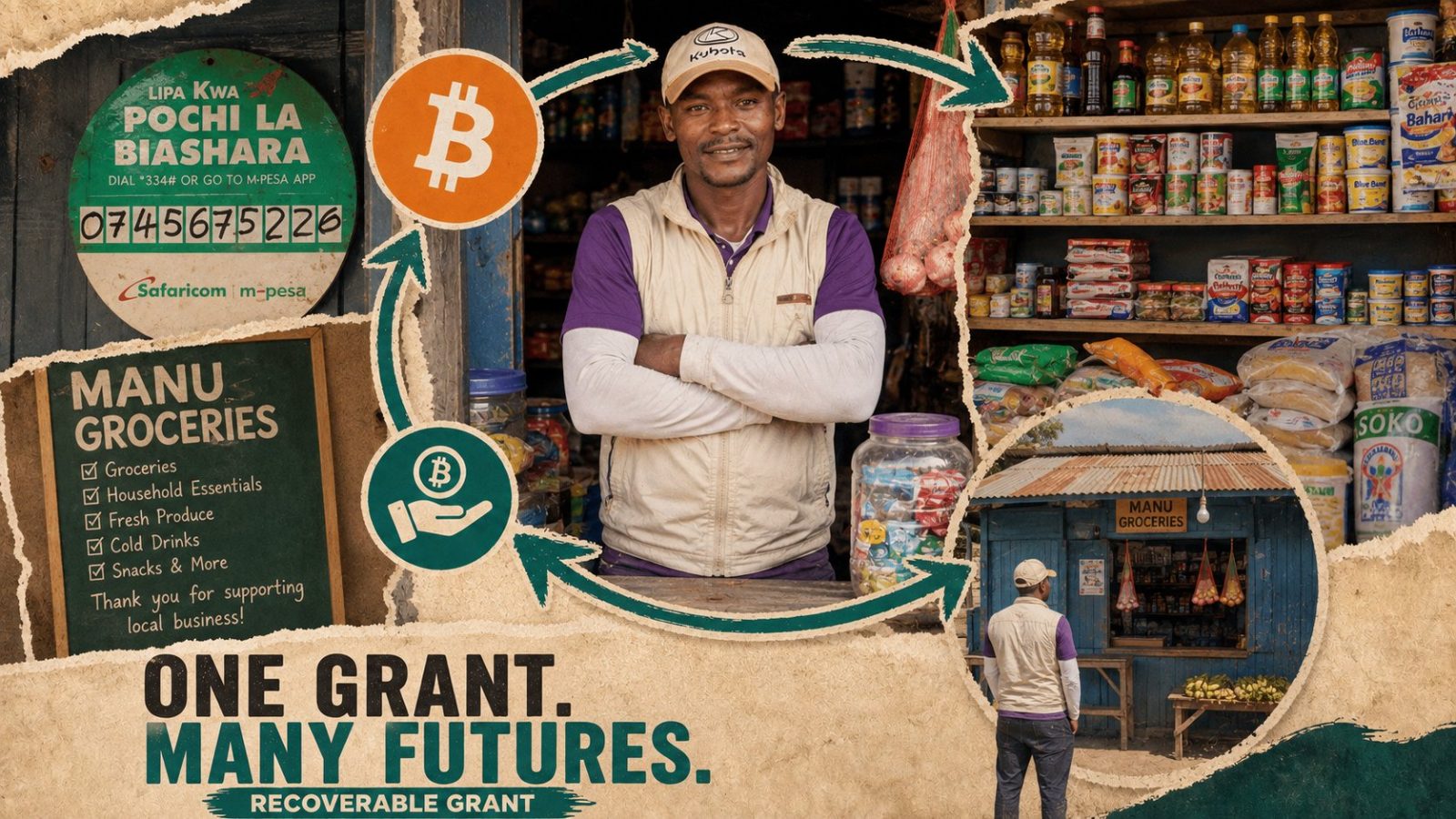
Geyser is adding about one field partner a month. Many projects have applied to become field partners, and they may wait "into mid next year," Mick said, while the team works with a few partners on tight finances.
Sponsors fund most of Geyser's costs. Field partners run on their own effort, with support from the Geyser Impact Fund.
For Mick, the test that matters is whether merchants' profits and employment grow. The money circulating between them is how they get there.
Kurman, who is writing a book on the African Bitcoin revolution, pointed to a debate on the continent about "Bitcoin churches versus Bitcoin factories": whether education and circular economies create the jobs Africa needs. "Bitcoin can help you store value, but you need to figure out ways to create that value," he said.
He pictures the chamas 10 years from now as local development funds, where the money paid forward keeps funding the next business or sends a teenager away to study.
Sources
- Geyser 2.0 and circular grants (X Space hosted by Geyser, October 21, 2026)
- Grandmatt Shop grant (Geyser on X, October 21, 2026)
- Yummy Tummy fully funded (Geyser on X, October 17, 2026)
- Yummy Tummy campaign (Geyser on X, October 3, 2026)
- Richland grant (Geyser on X, October 3, 2026)
- Digital Mutura fully funded (Geyser on X, October 6, 2026)
- Haven Food Court pays forward (Geyser on X, October 9, 2026)
- Geyser on X (grant funding split, September 16, 2026)
- Kingshop Kibera (Geyser)
- Haven Food Court espresso machine grant (Geyser)
- Mick Morucci (Bitcoin 2023 speaker page)
- Bitcoin Amantikir and the Serra da Mantiqueira (Acionista)