Introduction: A Question Worth Asking
Across Africa, millions of people are using Bitcoin for the first time, sending money across borders, protecting savings from currency devaluation, and accessing financial services that traditional banks have failed to deliver. But a growing number are going a step further and asking a bolder question:
Can I create Bitcoin myself?
The answer is yes. And the process of doing so is called Bitcoin mining.
This guide will explain exactly what Bitcoin mining is, how it works, and why Africa (with its vast renewable energy resources and fast‑growing Bitcoin communities) is quietly becoming one of the world's most exciting frontiers for miners in 2026.
No technical background required, just an open mind.
PS: This mining article will be in series, so stay tuned for the upcoming series, but before then let's dive in.
What Is Bitcoin, and Why Does It Need Mining?
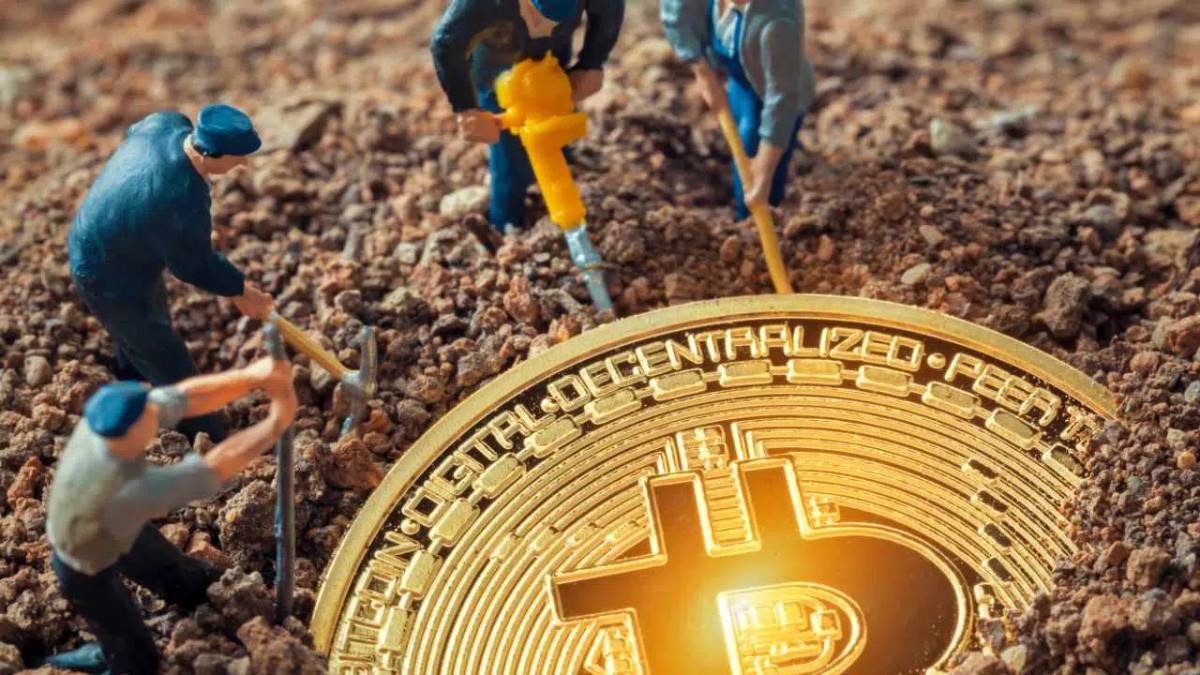
Before we talk about mining, let us understand what Bitcoin actually is.
Bitcoin is a decentralised digital currency. Unlike the Nigerian Naira, the South African Rand, or the Kenyan Shilling, no central bank prints or controls it. Instead, thousands of computers around the world keep the entire system running by verifying and recording transactions on a shared public ledger called the blockchain.
Bitcoin's blockchain is decentralized, meaning anyone can download and view it on the internet, as with the website mempool.space.
Think of the blockchain as a giant, publicly visible accounting book, except instead of being stored in one bank's vault, it exists on tens of thousands of computers simultaneously. No single person, company, or government controls it. This is what makes Bitcoin resistant to censorship and manipulation.
But here is the key question: if there is no central authority, who makes sure all these transactions are real and honest? The answer is: miners.
What Is Bitcoin Mining, Explained Simply?
Bitcoin mining is the process by which new transactions are verified, confirmed, and permanently recorded on the blockchain.
Here is how it works in plain terms:
Every few minutes, thousands of Bitcoin transactions are bundled together into what is called a block. Before that block can be added to the blockchain, it must be validated. To do this, computers around the world compete to solve a complex mathematical puzzle. The first computer to solve the puzzle wins the right to add that block to the chain — and as a reward, it receives a set amount of newly created Bitcoin.
This is Bitcoin mining: computers competing to solve mathematical puzzles in exchange for Bitcoin rewards.
The puzzle is deliberately designed to be very hard to solve but very easy to verify. It requires computers to make billions of random calculations per second until they find the right answer. This process is called Proof of Work, and it is the engine that keeps Bitcoin secure, honest, and decentralised.
Simple analogy: Imagine a massive national competition where thousands of people race to find a specific grain of sand on a beach. The first person to find it gets a cash prize. Bitcoin mining works the same way — except computers are the participants, the puzzle is mathematical, and the prize is Bitcoin.
What Is Hashrate?
You will often hear the word hashrate when people discuss Bitcoin mining. Here is what it means.
Every time a mining computer makes one calculation in an attempt to solve the puzzle, that is called a hash. The speed at which a computer performs these calculations is its hashrate, measured in terahashes per second (TH/s) or, for the entire global network, exahashes per second (EH/s).
The more hashes a computer can perform per second, the more puzzle attempts it makes, and therefore the higher its statistical chance of winning the block reward.
As of April 2026, the global Bitcoin network hashrate sits at approximately 968 exahashes per second — an almost incomprehensible amount of computing power working simultaneously to secure the network. This is also what makes Bitcoin so incredibly difficult to attack or manipulate.
How Much Is the Bitcoin Mining Reward?
Every time a miner successfully solves a block, they receive a block reward. This reward has two parts:
- Newly created Bitcoin: the "subsidy" built into Bitcoin's code
- Transaction fees: small fees paid by the users whose transactions are included in that block
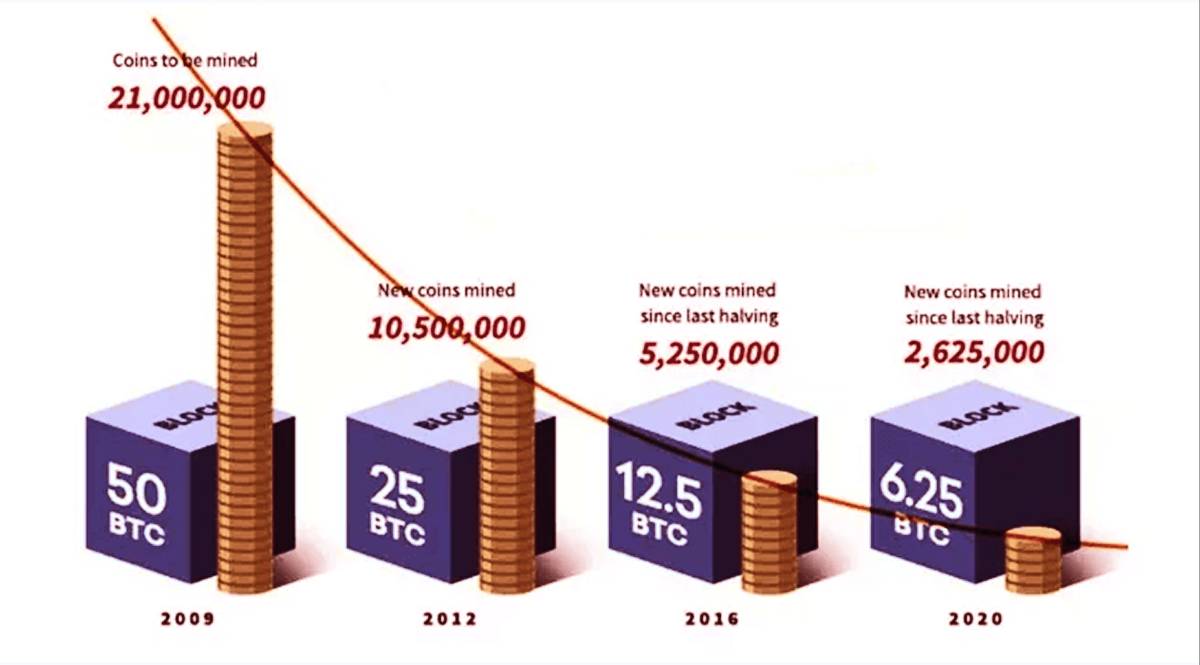
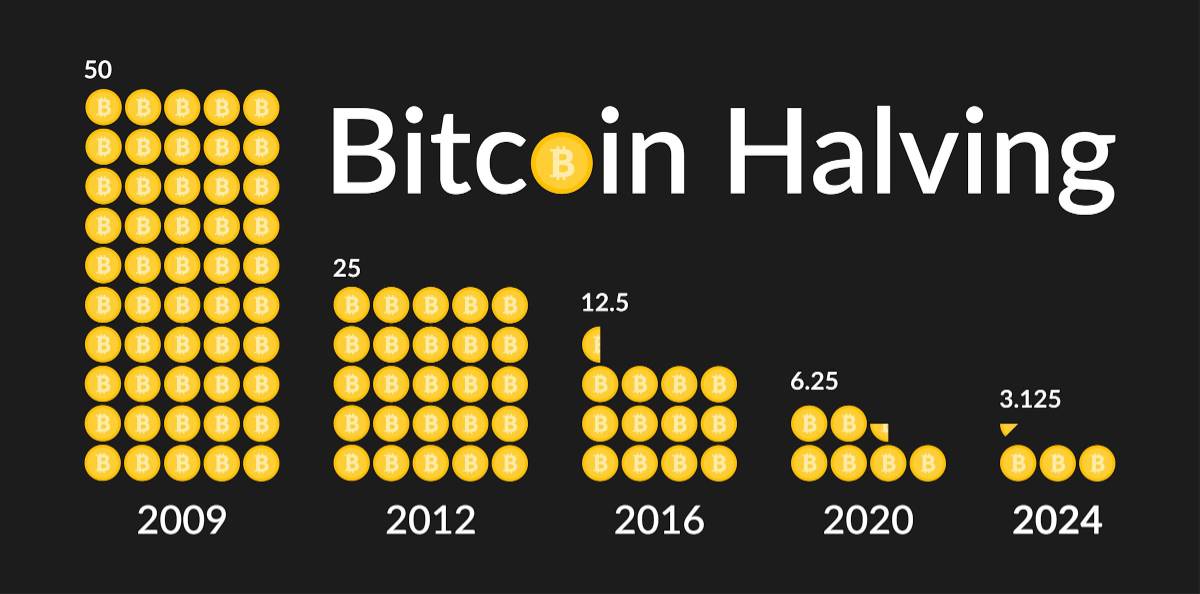
The subsidy portion is the one that changes over time. Bitcoin's code was designed so that the block subsidy halves every 210,000 blocks (roughly every four years) — an event known as the Bitcoin Halving.
The most recent halving occurred on April 20, 2024, reducing the block reward from 6.25 BTC to 3.125 BTC per block. The next halving is expected around April 2028, when the reward will fall to 1.5625 BTC.
At Bitcoin's current trading price of approximately $74,786 per BTC (as of mid‑April 2026, per Fortune), winning a single block reward is worth roughly $233,000 USD, before transaction fees, which can add significantly more during periods of high network activity.
This built‑in scarcity is a core feature of Bitcoin's design. The halving mechanism ensures that the total supply of Bitcoin will never exceed 21 million coins, making it fundamentally different from fiat currencies that can be printed without limit.
Who Are Bitcoin Miners?
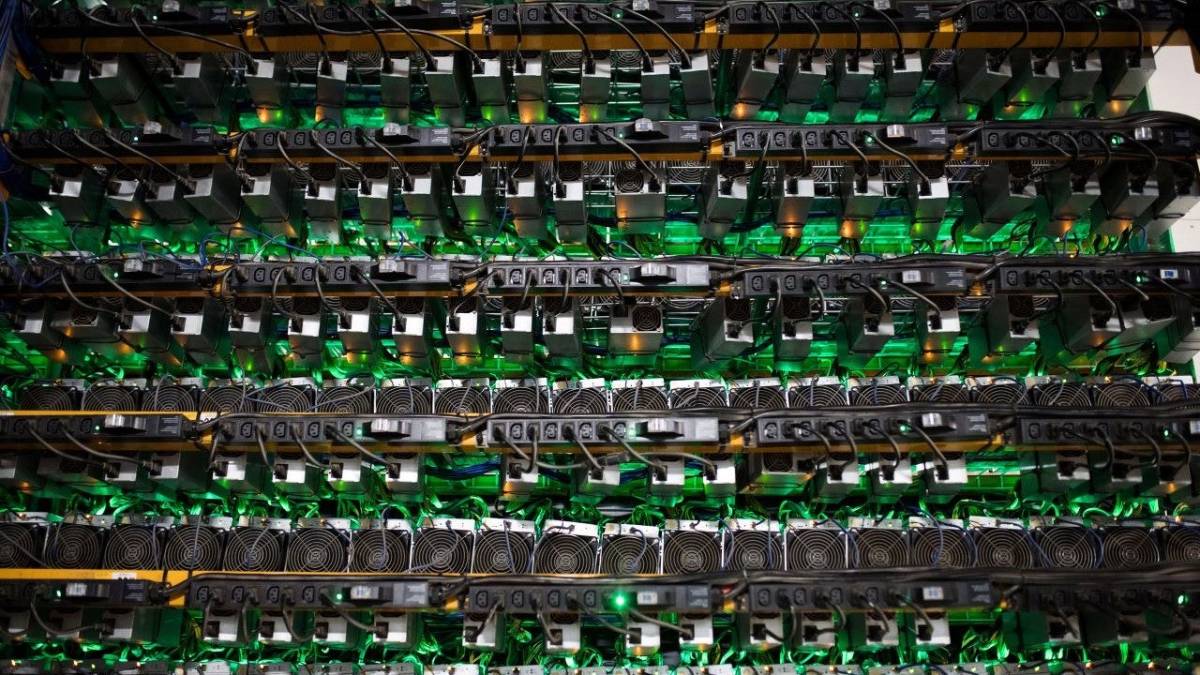
Bitcoin miners come in all shapes and sizes. They include:
- Large mining companies operating warehouse‑scale facilities with thousands of machines, often in locations with cheap electricity (the United States, Ethiopia, and Kazakhstan are currently among the largest mining countries by hashrate)
- Mid‑size operations running dozens to hundreds of machines, often powered by renewable energy
- Solo hobbyists running one or two machines from their home or a small dedicated space
- Enthusiasts running tiny, affordable devices like the Bitaxe just to participate in the network and learn
There is no single type of miner. The network is open to anyone with the hardware, electricity, and internet connection to participate.
Frequently Asked Questions
Can I mine Bitcoin with my phone or laptop?
No. Bitcoin requires specialised ASIC hardware. A phone or standard computer would consume far more electricity than the Bitcoin value it could ever produce. The network difficulty is simply too high for general‑purpose computing.
Is Bitcoin mining legal in Africa?
Mining is legal in most African countries. South Africa, Nigeria, and Kenya have the most developed regulatory frameworks. Some countries, like Morocco, have explicit restrictions. Always verify your local regulations.
Do I need a lot of money to start?
Not necessarily. A Bitaxe device costs under $200 and lets you participate in Bitcoin mining. You will not expect to profit from it, but it is a genuine, low‑cost way to start learning.
How do I know if mining is profitable for me?
Profitability depends primarily on your electricity cost. The lower your cost per kilowatt‑hour, the better. Tools like WhatToMine let you enter your hashrate and electricity cost to estimate returns.
Summary: What You Need to Know
Bitcoin mining is the process that keeps Bitcoin honest, secure, and decentralised. Miners use specialised computers to solve mathematical puzzles, and the winner of each puzzle adds a new block of transactions to the blockchain and receives a Bitcoin reward, currently 3.125 BTC per block, worth approximately $233,000 at today's prices.