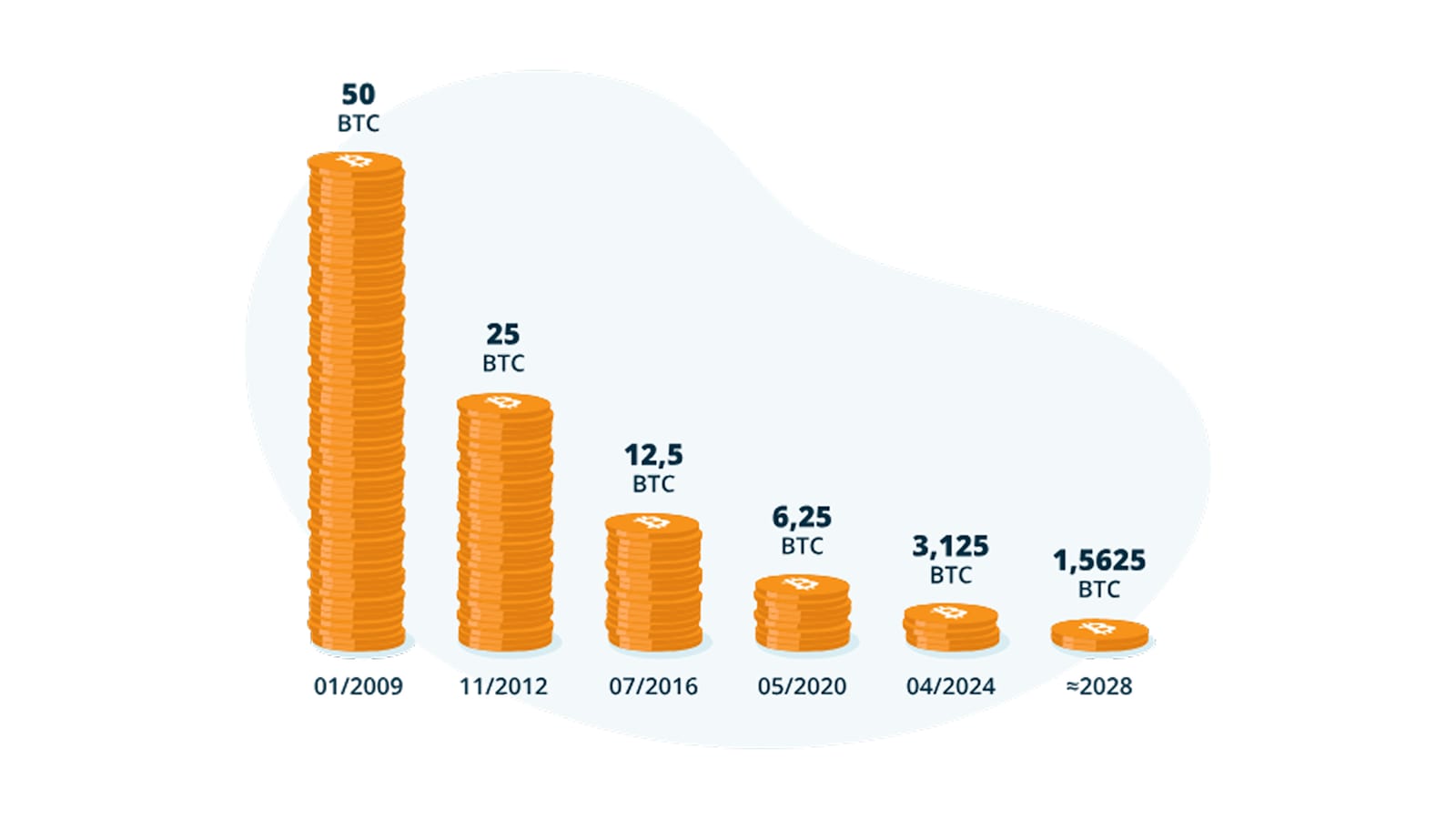
Bitcoin halving is a scheduled event that reduces the number of new bitcoins created and earned by miners by half.
This event happens automatically every 210,000 blocks mined, which takes approximately four years. It is one of the most important features of Bitcoin’s monetary policy.
Why Does It Happen?
Bitcoin has a fixed maximum supply of 21 million coins. This limit was hard‑coded into the Bitcoin protocol by its creator, Satoshi Nakamoto, to ensure scarcity.
Unlike gold, which can be mined continuously as new deposits are found, Bitcoin's supply is finite and predictable. Once the 21 million limit is reached, no new bitcoins will ever be created.
The halving process gradually slows down the issuance of new coins over time, reinforcing Bitcoin's scarcity and helping protect its long‑term value.
Bitcoin Halving History
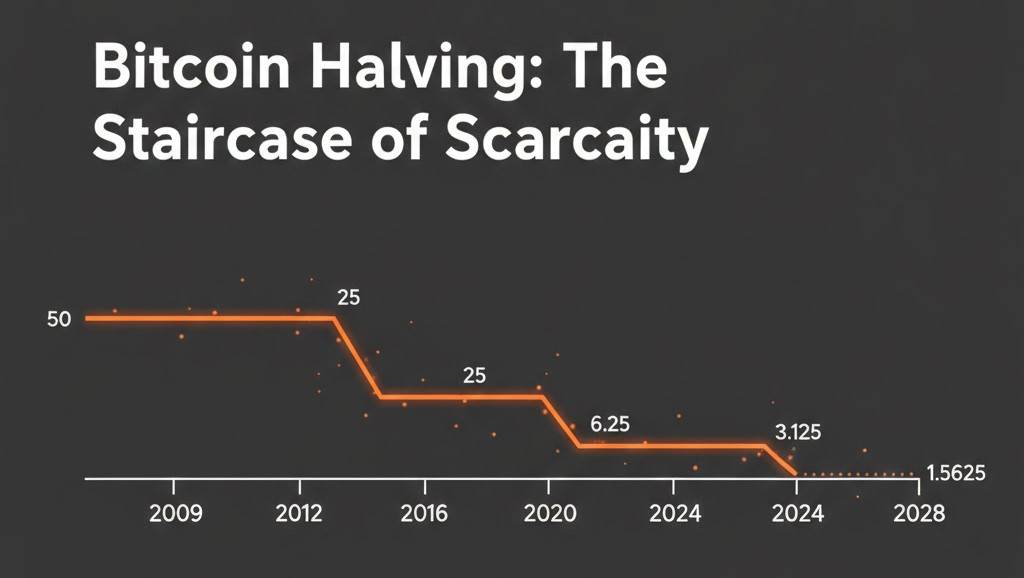
Below is a summary of all past and upcoming Bitcoin halving events:
⟼ 2009 (Block 0): Reward = 50 BTC per block
⟼ 2012 (Block 210,000): Reward = 25 BTC per block
⟼ 2016 (Block 420,000): Reward = 12.5 BTC per block
⟼ 2020 (Block 630,000): Reward = 6.25 BTC per block
⟼ 2024 (Block 840,000): Reward = 3.125 BTC per block
⟼ Expected in 2028 (Block ~1,050,000): Reward = 1.5625 BTC per block
The Next Halving: 2028
The next halving is expected to occur around block 1,050,000, which is estimated to be between late March and mid‑April 2028.
At that point, the block reward will decrease from 3.125 BTC to 1.5625 BTC, further reducing the number of new bitcoins entering circulation every 10 minutes.
Why Bitcoin Halving Matters
Bitcoin halving directly impacts the rate at which new bitcoins enter circulation. Each time the reward is cut, the supply of new coins becomes more limited.
This means:
1. Fewer new bitcoins are available for purchase
2. Bitcoin becomes harder to obtain over time
Historically, halving events have preceded significant price increases. The fixed supply model helps maintain Bitcoin’s role as a store of value
Summary
Bitcoin halving is a key part of Bitcoin’s design. It ensures a predictable and decreasing supply over time, which helps distinguish Bitcoin from inflationary currencies and even scarce resources like gold.
With each halving, Bitcoin becomes increasingly scarce, reinforcing its value proposition as digital hard money.