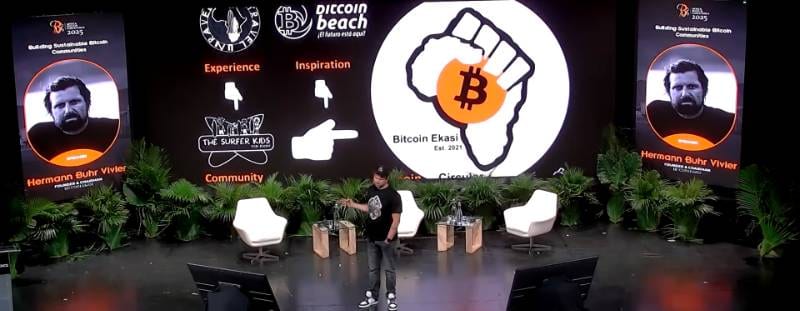
The "No Mushrooms" Rule: Herman Bur Vivier on the Long‑Game of Circular Economies in ABC 2025
As global interest in Bitcoin circular economies grows, Herman Bur Vivier, the visionary behind South Africa’s Bitcoin Ekasi, used his platform at Africa Bitcoin Conference 2025 to issue a reality check to developers and donors: sustainable ecosystems cannot be forced into existence.
Vivier’s "No Mushrooms" philosophy posits that Bitcoin projects do not simply appear overnight; they are the result of years of "blood, sweat, and tears" built upon existing community trust.
He revealed that Bitcoin Ekasi was only possible because it was integrated into a community organization he had already been leading for 15 years amongst other important layers.
This pre‑existing social capital allowed for the organic introduction of Bitcoin as a solution to real‑world problems.
Herman Background
His advocacy for Bitcoin as a medium of exchange (MoE) rather than just a store of value (SoV) is born from personal need.
According to Herman, he didn’t get into Bitcoin because of its store‑of‑value (SoV) feature, but instead, it was because of its medium‑of‑exchange (MoE). Below is how!
In 2015, while running a tourism business, Herman and his wife found themselves "stuck behind sanctions," unable to receive payments from international clients through traditional banking corridors.
Bitcoin served as a vital lifeline; it helped them receive and use money beyond borders, providing a borderless payment rail that the legacy system could not switch off.
This was the inspiring story behind how Herman got into Bitcoin, long before founding the Bitcoin Ekasi project.
Bitcoin Ekasi: Brief History
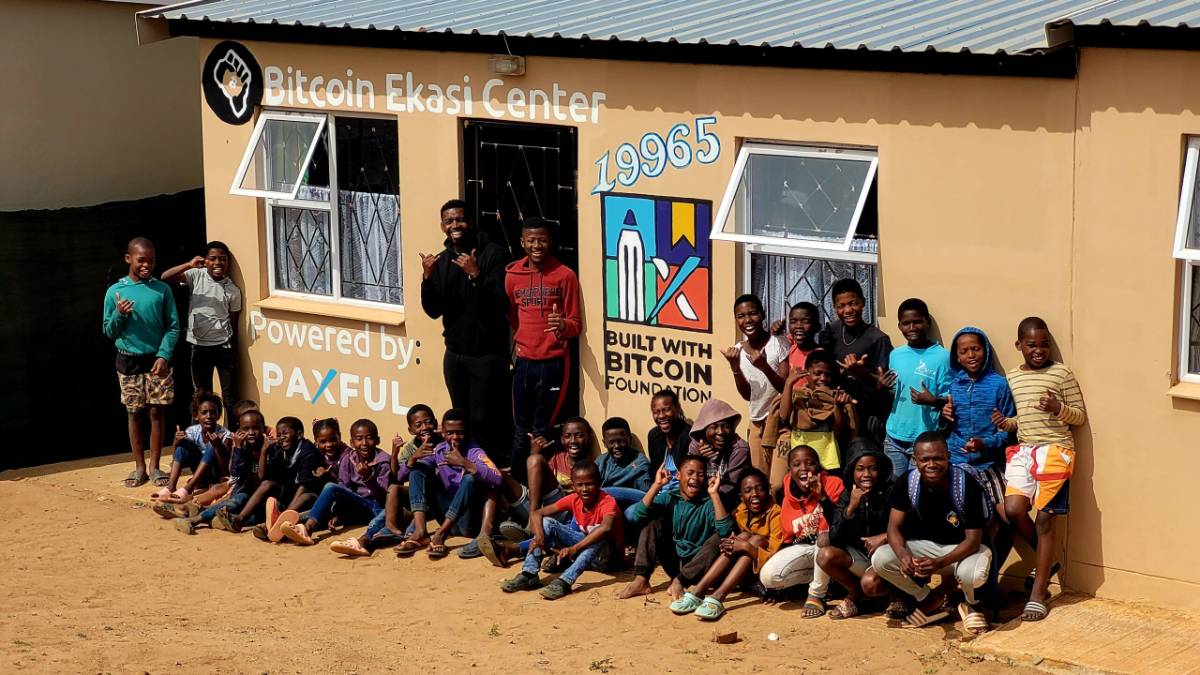
Before the Bitcoin Circular Economy (BCE) Project was initiated, there were different layers to it that made its model very unique and promising. Let’s explore it!
Herman's experience as he built up his business Unravel Surf Travel with Bitcoin, together with the inspiration from Bitcoin Beach all the way from El Salvador, combined with The Surfer Kids NPO, a community organisation he’s been running for over 15 years, all culminated in the Bitcoin Ekasi project.
The Bitcoin Ekasi Project didn’t just appear overnight; it was built from many years of hardworks of, blood, sweat, and tears. Although it gained traction at the beginning, it took a lot of years before it was established.
Many Bitcoin Circular Economies (BCE) failed to understand this very concept, that many of these very successful BCE are built on top of something else that came before.
What are Bitcoin Circular Economies and Why do they Matter?
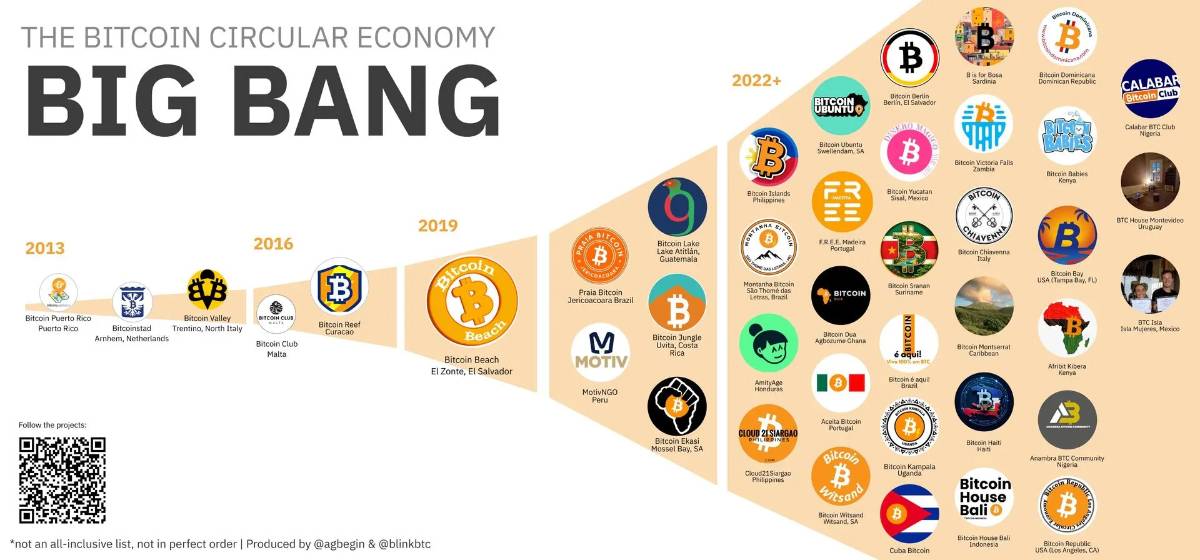
These are projects that focus on real‑life earning, spending, and saving Bitcoin in a particular community.
For Herman, the goal of a circular economy is to ensure that Bitcoin earned in a community stays in the community, and is circulated around the community through its use peer‑to‑peer (P2P).
Another important thing to note is that the success of a Bitcoin Circular Economy is not measured by size but by frequency and density.
Some insightful facts that Herman delivered in his talk are that;
“If you see somebody building a Bitcoin Circular Economy (BCE), and all he does is talk about numbers, that's a clear indication that they’re heading in the wrong direction.”
He added, “Bitcoin Circular Economies are not there to scale the adoption of Bitcoin; it is there to function as a Proof‑of‑Concept.”
In Conclusion
By training local merchants to accept Lightning payments and encouraging residents to save and spend in the same currency, projects like Bitcoin Ekasi are creating a resilient financial parallel to the failing fiat structures.
His message to the conference was clear: stop looking for "quick wins" and start building on the foundations of community trust.