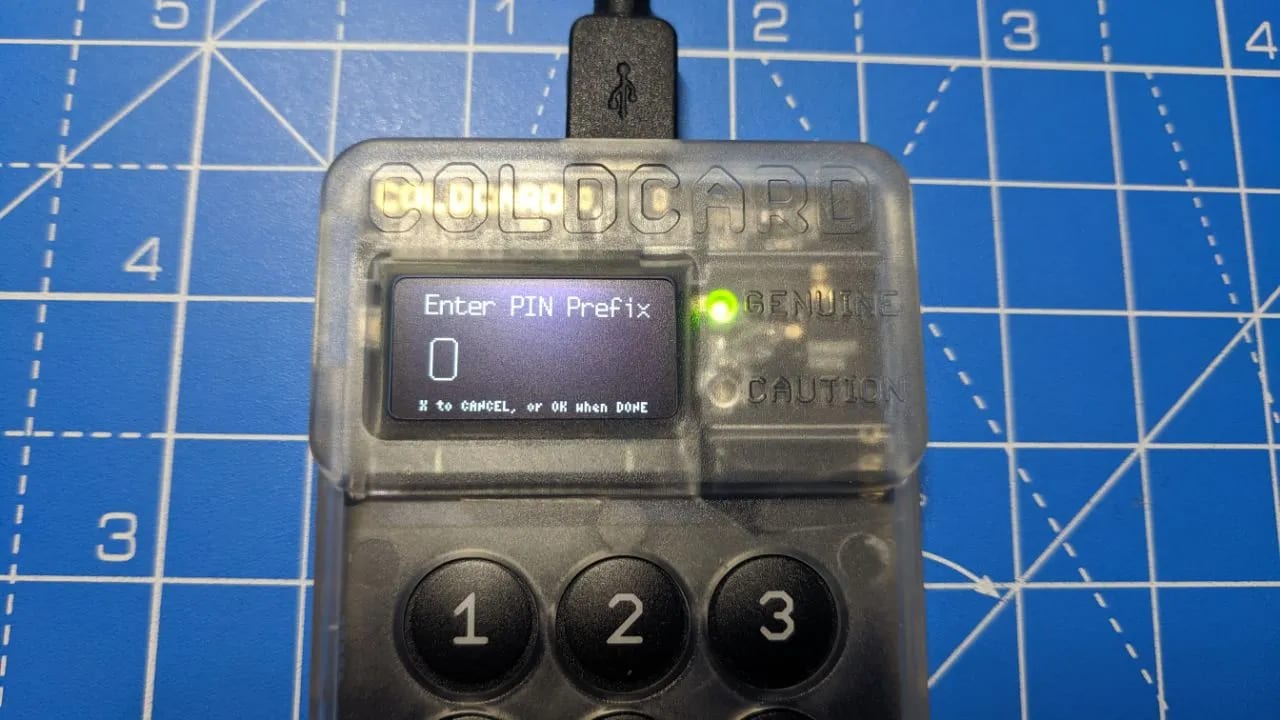
In mid‑2026, Bitcoiners lost roughly $70 million from hardware wallets they trusted. They had not been phished. They had not leaked their seed phrases. They had bought respected devices, kept their keys offline, and held their own Bitcoin, exactly as they were told to.
The flaw was in something almost nobody thinks about: the randomness used to create their seed phrase. It is the single most important property of a seed, and the one least understood.
This guide explains what it is, why it matters, and how to make sure yours is genuinely secure, no matter what wallet you use. (For the specific incident that made this urgent, see the COLDCARD security alert.)
What Is a Seed Phrase? The Fundamentals
Everything here rests on understanding what a seed phrase is and how it works. I wrote a full beginner‑to‑advanced guide on exactly that: What Is a Seed Phrase and Why It Matters. If any terms below feel unfamiliar, start there and come back.
The one‑line version: your seed phrase is the master key to your Bitcoin, usually 12 or 24 words. Anyone who has it controls your funds. And those words are just a human‑readable version of a very large random number. That randomness is where this whole story lives.
What Is Entropy in a Bitcoin Seed Phrase?
Those 12 or 24 words are not chosen from thin air. They encode a huge random number called entropy, the real foundation of your wallet's security. As I explained in the seed phrase guide, a 12‑word phrase carries 128 bits of entropy, roughly 340 undecillion possible combinations. Even testing a trillion guesses per second, you would not exhaust them before the universe ended.
Think of the seed phrase as a combination lock, and the words as a friendly way of writing down the combination. If the combination is genuinely random, guessing it is impossible. But if the machine that picked it was not truly random, if it was predictable in some way, the number of real possibilities collapses, and "impossible to guess" quietly becomes "possible to guess."
That is exactly how people lose funds to weak entropy. The words look normal. The wallet works normally. But the randomness behind them is weak, so the lock is far easier to pick than anyone realizes. In the 2026 COLDCARD incident, some seeds had as little as 40 bits of entropy instead of 128, which moved them from "impossible" into "a well‑resourced attacker can do this at scale." Someone did.
This is the uncomfortable truth of self‑custody: a seed phrase is only as strong as the randomness used to create it.
What This Teaches Every Bitcoiner
It is easy to read about losses like these and conclude that self‑custody is too dangerous. That would be the wrong lesson. The money lost was preventable with habits recommended for years: your own entropy, a passphrase, multisig for size.
Self‑custody is not "buy a device and trust it." It is a skill, and like any skill involving real money, it rewards the people who take the time to understand what they are doing. Your Bitcoin is only as safe as the randomness at the root of your keys, and that randomness is something you can, and should, take into your own hands.
Start with the fundamentals in What Is a Seed Phrase and Why It Matters, then layer on dice, a passphrase, and multisig. Do it right, and no single bug, company, or attacker can touch what is yours.
Frequently Asked Questions
What is entropy in a seed phrase?
Entropy is the randomness used to create your seed phrase. Higher entropy means more possible combinations and a seed that is effectively impossible to guess. A standard 12‑word seed has 128 bits of entropy. When a device generates a seed with far less, such as the 40 bits seen in the 2026 COLDCARD incident, it becomes feasible to brute‑force.
How do I generate a truly secure seed phrase?
Add your own randomness with at least 50 physical dice rolls, protect your wallet with a strong unique BIP‑39 passphrase, and use multisig for larger amounts. These put the randomness in your hands rather than relying entirely on a device.
Is a 12‑word seed phrase secure enough?
Yes, when generated with proper randomness. A 12‑word phrase carries 128 bits of entropy, considered secure by virtually every expert. The danger is never the number of words; it is weak randomness behind them.
Does a passphrase protect me if my seed is weak?
Largely, yes. A strong, unique passphrase is a separate secret an attacker also needs. Even if the seed itself could be reproduced, it is useless without the passphrase. Just remember: lose the passphrase and you lose the funds.
Can I trust my hardware wallet's random number generator?
Mostly, but not blindly. Reputable devices use dedicated hardware randomness, but bugs happen, as 2026 proved. Adding your own dice entropy and a passphrase means you never have to fully trust any single manufacturer.