The recent COLDCARD incident dragged an often‑overlooked concept into the spotlight: entropy.
Most Bitcoiners know what a seed phrase is. Far fewer know where those twelve words actually come from, or that the real security of their Bitcoin was decided before they ever wrote a single word down.
So what exactly is entropy, and why does it matter this much?
What Is Entropy in Simple Terms?
Entropy is the randomness used to generate your Bitcoin wallet. Your 12 or 24 words are simply the final, readable result of that randomness.
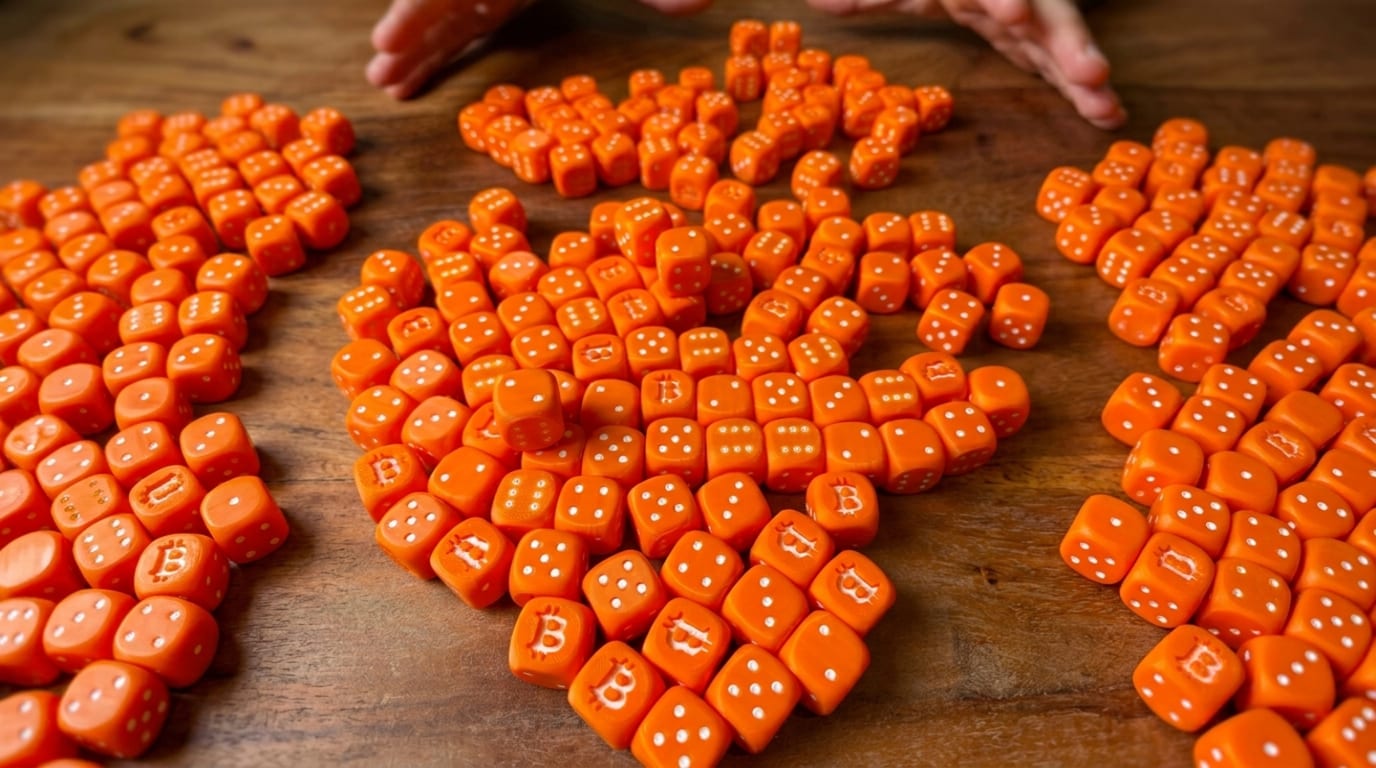
Think of it like rolling a perfectly fair die. Every outcome has an equal chance of coming up, and there is no way to predict the next roll. That is the kind of pure unpredictability a Bitcoin wallet aims for when it creates your keys.
The more genuine randomness it gathers, the more impossible your wallet becomes to guess.
That randomness is measured in bits. A 12‑word seed phrase is built from 128 bits of entropy. A 24‑word phrase uses 256 bits. The bigger that number, the more possible combinations exist, and the safer you are.
Where Do Your Seed Words Actually Come From?
Here is what happens the moment you set up a wallet, and it is simpler than it sounds.
First, the wallet generates a large random number, that is the entropy. Then it adds a small checksum, a few extra bits that let the wallet catch typos later. Finally, it slices that long string of bits into groups, and each group points to one word in a fixed list of 2,048 English words defined by the BIP‑39 standard.
The result is your seed phrase.
This is the part most people miss: your words are not something separate from the randomness. They are the randomness, just rewritten in a form you can copy onto paper. Whoever holds the words holds the entropy, and whoever holds the entropy can rebuild your entire wallet.
Why Weak Entropy Breaks Everything
Picture your seed phrase as a combination lock.
With a full 128 bits of entropy, there are roughly 340 undecillion possible combinations. That is not a number you brute‑force. Every computer on earth guessing together could not work through them before the universe ended. Your funds are safe behind a lock with more combinations than there are grains of sand on the planet, many times over.
But the number of real combinations depends entirely on how much genuine randomness went in at the start. If a wallet's randomness is broken and it only produces, say, 40 bits instead of 128, then the lock that looked like it had 340 undecillion combinations secretly has only about a trillion. A trillion feels enormous to a human. To an attacker with the right hardware, it is a weekend of work.
That is precisely what went wrong in the COLDCARD incident. The randomness behind some seeds was far weaker than intended, so wallets that appeared perfectly secure were quietly guessable.
The Danger You Cannot See
Here is the unsettling part.
If the randomness behind your seed is weak, your wallet will still hand you a perfectly normal‑looking phrase. Twelve real words. A valid checksum. An app that works exactly as expected. Nothing about those words tells you whether the randomness that created them was strong or weak.
You cannot look at a seed phrase and judge its security. Two phrases can look identical in every way, and one can be unbreakable while the other is a sitting duck. The strength was decided upstream, at the moment of generation, and then hidden inside words that all look the same.
That invisibility is exactly why entropy matters, and why so few people worried about it until wallets started getting drained.
Why This Changes How You Think About Security
Most people believe Bitcoin security starts when they write down their seed phrase and hide it safely. That matters, but it is the second half of the story.
Bitcoin security actually begins the moment your wallet creates your seed, when it gathers the randomness that everything else is built on. If that foundation is weak, no amount of careful storage can save you. You can engrave a compromised seed in titanium and lock it in a vault, and an attacker will still empty it, because the weakness was baked in before you ever touched it.
Strong storage protects a strong seed. It cannot rescue a weak one.
How to Make Sure Your Entropy Is Strong
You do not need to be a cryptographer to protect yourself. You need to make sure real randomness went into your seed.
The most reliable way is to add your own. Many hardware wallets let you generate a seed using physical dice rolls, where you roll a die dozens of times and those results feed the randomness directly. A die rolling on your table is genuine physical randomness that no software bug can weaken. It puts the entropy back in your own hands.
You can also add a passphrase, a secret word or phrase only you know that combines with your seed. Even if the underlying randomness were weak, an attacker still could not get in without the passphrase.
And for larger amounts, multisig spreads your security across multiple independent keys, so no single weak seed can sink you.
If you want the full walkthrough on generating and protecting a seed properly, I covered it here: What Is a Seed Phrase and Why It Matters.
The Takeaway
Entropy is the quiet foundation underneath every Bitcoin wallet. It is the randomness that turns twelve ordinary words into an unbreakable key, and when it fails, it fails invisibly.
The lesson from the COLDCARD incident is not that hardware wallets are dangerous. It is that your security begins earlier than you thought, not when you write your seed down, but the instant your wallet dreams it up. Understand that, add your own randomness where you can, and the foundation of your Bitcoin becomes something no one can quietly take from you.
Frequently Asked Questions
What is entropy in a Bitcoin wallet?
Entropy is the randomness a wallet uses to generate your seed phrase. It is measured in bits: a 12‑word phrase uses 128 bits, a 24‑word phrase uses 256 bits. More entropy means more possible combinations and a wallet that is effectively impossible to guess.
Are my seed words the same thing as entropy?
Essentially, yes. Your seed words are a human‑readable encoding of the original random number (the entropy), plus a small checksum. The words are the entropy, rewritten so you can back it up on paper.
Can I tell if my seed phrase has weak entropy?
No. A seed generated from weak randomness looks identical to a strong one, valid words, correct checksum, a working wallet. That is what makes weak entropy so dangerous, and why how your seed was generated matters as much as how you store it.
How do I make sure my seed phrase has strong entropy?
Let a reputable wallet generate it, and for extra assurance, add your own randomness with physical dice rolls. A passphrase and multisig add further protection. These put the randomness in your control rather than trusting a device alone.
Is a 12‑word seed phrase (128 bits) secure enough?
Yes, when generated with proper randomness. 128 bits is considered secure by virtually every expert. The risk is never the number of words, it is weak randomness behind them.